
The SoulJourners Academy
Advancing Knowledge and Justice Through Critical Thinking
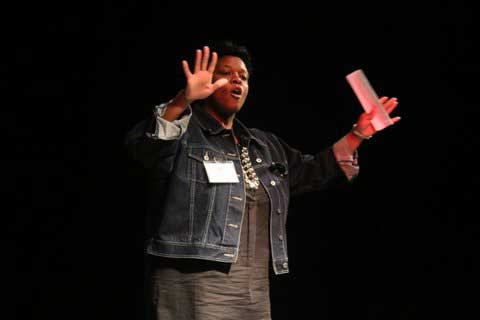
I have been teaching Black Studies for nearly two decades. My teaching philosophy is based on the Paulo Freire’s concept of liberatory pedagogy; knowledge as a form of empowerment. Students are expected to take responsibility for their pace of learning and discovery. They are encouraged to become critical thinkers by interrogating social norms, ideas, and structures and critically engaging on who may benefit from, or are exploited by them. And finally, students will be asked to reimagine spaces and ideas that are more equitable, and new practices that restore and repair historical harms and oppressions. My approach is informed by my own personal experience with learning and being a first generation college student and having a minoritized identity of being both Black and a woman within predominantly white institutions. My classrooms – both physical and virtual – are set up to be less hierarchical, to promote interaction, co-learning, accessibility, and mutual respect.
Courses Taught
Sociology of the African American Experience
This course is an introductory sociology course with emphasis on the issues affecting the African American community through an intersectional frame. Primary focus is on social institutions, and their impact of African American community.
“There Goes the Neighborhood”: US Racial Residential Segregation
This course chronicles the pattern of racial residential segregation in the United States, both past andpresent. We will examine the methods that maintain racially distinct neighborhoods: racial violence, deed restrictions, restrictive covenants, blockbusting, redlining, slum clearance, the creation of public housing, and the practices of what sociologist James Loewen calls “sundown towns”. This course will cover theoretical explanations of segregation and ways in which segregation is measured empirically. Finally, we will explore the links between segregation and education, social mobility, health and mortality. Case studies of segregation in urban settings like Los Angeles, Detroit, and New York City along with the South and Midwest will be highlighted. Finally, we will brainstorm challenges to the current systems of segregation and review contemporary critiques of integration.
Introduction to African American Studies
This course serves as an introduction to the rich and varied field of African American studies. The history, geography, politics, economics, arts, and culture of the African diaspora will be examined through an investigation of foodways.
“There Goes the Neighborhood”: US Racial Residential Segregation
This course chronicles the pattern of racial residential segregation in the United States, both past and present. We will examine the methods that maintain racially distinct neighborhoods: racial violence, deed restrictions, restrictive covenants, blockbusting, redlining, slum clearance, the creation of public housing, and the practices of what sociologist James Loewen calls “sundown towns”. This course will cover theoretical explanations of segregation and ways in which segregation is measured empirically. Finally, we will explore the links between segregation and education, social mobility, health and mortality.
Feminist Epistemologies
This course is a survey seminar of critical, quantitative and qualitative methods utilized in Feminist research, with particular emphasis on multicultural feminisms such as Intersectionality and Black Feminism.
Research Methods in African American Studies
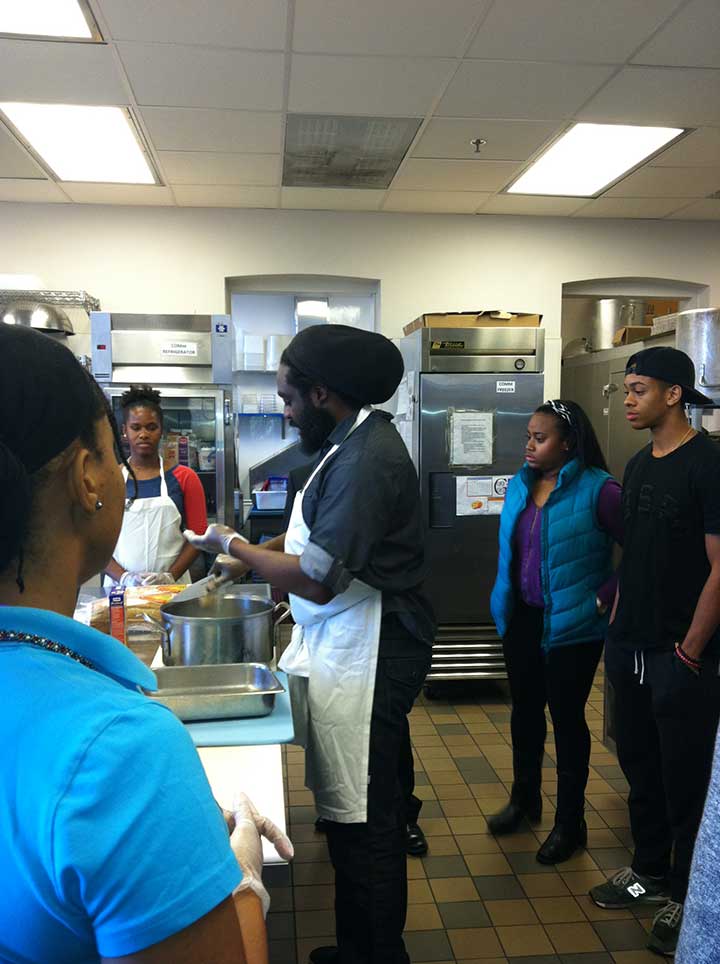
This course is survey of the quantitative and qualitative methods of social research, with particular emphasis in the African-American community. – ‘Say It Loud”: African American Foodways (AAS_FST 200 yllabus_Fall15_FinalRevised) – This course explores the African American experience and the cultural connection of the African Diaspora through an examination of foodways. Bower (2007) describes the exploration of African American foodways as “a means to understand the way food and food customs have shaped group and individual identities – especially the cultural retentions of West Africa and how those are adapted within the New World”.
Hurricane Katrina: Race, Class, Gender, and Disaster
This course explores the socio-historical development of the Gulf Region of the United States to understand the disparate impacts of Hurricane Katrina and the breach of levees around the city of New Orleans. Students will pay particular attention to the life and institutions prior to the storm and levee breach in the city of New Orleans: capital expansion and its impact on the physical landscape of the city and the impact of race, class, and gender inequality.
Black Feminist Geographies
This seminar explores the theoretical antecedents behind the concept of Black feminist spatial imagination, BFSI (Ducre, 2018): Black Feminism (early Black feminist thought, Black feminist sociology, intersectionality, Black Geographies (racial capitalism, plantation capitalism, Black fugitivities and marronage, carceralities, surveillance, and abolition), and environmental justice (settler colonialism, environmental racism, pollution, air toxics, and state violence).
Environmental Justice
This course explores the academic research, social movements, and federal policies with regard to environmental justice. What is Environmental Racism and Injustice? This term refers to institutional rules, regulations, policies or government or corporate decisions that deliberately target communities of color and low-income neighborhoods for locally undesirable land uses, resulting in communities being disproportionately exposed to toxic and hazardous waste (Bryant). What is Environmental Justice? This term refers to those cultural norms and values, rules, regulations, behaviors policies, and decisions that support sustainable development, so that people can interact with confidence that their environment is safe, nurturing and productive (Bryant) See also food justice and climate justice.
Register Today
Contact Kishi today to register for one of her many informative and educational courses.

Broaden Your Horizons with Kishi
Connect with Kishi Ducre and expand your knowledge in environmental and social justice across the world.